 |
 |
 |

 |
|
|

WOMEN AND ALCOHOL
 Alcohol consumption guidelines for women
Due to a generally lower body weight, less body fluid (or volume of distribution), more body fat, smaller livers, and less alcohol dehydrogenase (the enzyme which breaks down alcohol to acetaldehyde in the stomach and liver) women are advised to drink less alcohol than men. Also the organs and tissues of women are more susceptible to the toxic effects of acetaldehyde before it is broken down into C02 and water. For example, women are advised to consume up to 14 units per week, spread over a number of days.
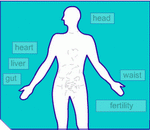
Find out more about how alcohol can effect you from our interactive female body
Find out more about alcohol and breast cancer (Click for more information)
Pregnancy and Alcohol - Planning a Pregnancy
 Drinking more than once or twice a week, or more than one or two drinks each time, can affect the menstrual cycle and fertility levels. It is also known that mothers are often not aware for the first few weeks that they are pregnant, hence by not drinking alcohol while trying to conceive, the risk of exposing the foetus to alcohol during the critical early development is avoided.
Drinking when pregnant
Findings by The Food Doctor and the UK charity 'New Life' which helps sick and disabled babies reveals that 25% of babies in the UK are unplanned, and 17% of mothers didn’t know they were pregnant until eight weeks or more. Therefore balanced advice concerning the effect of alcohol use in pregnancy is crucial to prevent unnecessary concern amongst this group of mothers to be, please consult you GP or health visitor for more information.
If you drink when pregnant, alcohol from the blood crosses the placenta and enters the baby’s blood. As the foetus is still developing it takes longer for its liver to break down the alcohol, potentially exposing its organs and tissues to alcohol. As no threshold of safe drinking when pregnant has been established, the best advice if pregnant is not to drink. In the first three months, heavy drinking can damage the developing organs and nervous system. Continued heavy drinking for the remaining six months can have the additional effects of retarding growth and development, which can lead to both behavioural and physical problems for the baby once it is born. A good diet, sufficient fluid intake, reducing caffeine intake and not smoking during pregnancy will also help provide a healthy environment for the unborn baby.
UK Chief Medical Officers’Guidelines on low risk drinking 2016 state that "If you are pregnant or planning a pregnancy, the safest approach is not to drink alcohol at all, to keep risks to your baby to a minimum. Drinking in pregnancy can lead to long-term harm to the baby, with the more you drink the greater the risk".
Breastfeeding and alcohol
Alcohol clears from a mother’s milk at the rate of around one drink every two hours. So it is best to avoid alcohol before breastfeeding, or to plan ahead and express milk if drinking alcohol later. Alcohol in the mother’s bloodstream passes into breast milk and can cause irritability, poor feeding and sleep disturbance. It can also reduces the amount of breast milk produced.
Drinking and Fetal Alcohol Spectrum Disorder (FASD)
Fetal Alcohol Spectrum Disorder (FASD) is a term which covers a range of behavioural and physical problems which may result from heavy drinking during pregnancy.
They have been classified as:
- Fetal Alcohol Syndrome (FAS)
- Partial Fetal Alcohol Syndrome (pFAS)
- Alcohol-Related Birth Defects (ARBD)
- Alcohol-Related Neurodevelopment Disorder (ARND)
- The syndromes, defects, or disorders are sometimes accompanied by other behavioural disorders such as Attention Deficit Hyperactivity Disorder (ADHD).
FASD is not genetic, inherited or curable. Not all women who drink during pregnancy will have a child with FASD but research shows that drinking alcohol heavily or binge drinking regularly during pregnancy increases the chance of the fetus being harmed. Some of the behavioural and physical problems identified include:
- Prenatal growth retardation and associated low birth weight
- Central nervous system dysfunction
- Characteristic facial malformations (FAS)
- Heart and kidney defects
- Hearing and sight impairments
- Limited joint movement
- Hernias Cleft lip or palate
- Brain damage
- More information is available from FASaware www.fasaware.co.uk
Alcohol use and successful aging
Among 13,894 women in the Nurses’ Health Study, investigators prospectively examined alcohol use assessed at midlife in relation to ‘successful ageing’, which was defined as survival to age 70 years, not having a major chronic disease (such as coronary disease, cancer, stroke, diabetes), and having no major cognitive impairment, physical impairment, or mental health problems. Only 11% of the women met these criteria. The results indicate that moderate drinkers, especially those consuming wine and drinking regularly, were more likely to exhibit successful ageing. For average amount consumed, the largest benefit (an increase of 28%) was among women who reported 15.1 30 g of alcohol per day (an average of just over 1 to 2 drinks per day), when compared with non-drinkers. The frequency of drinking was especially important: in comparison with non-drinkers, women who drank only on 1 to 2 days per week had little increase in their risk of successful ageing, but those drinking on at least 5 days per week had almost a 50% greater chance of successful ageing.
(Sun Q et al. Alcohol consumption at midlife and successful ageing in women: A prospective cohort analysis in the Nurses’ Health Study. PLoS Med 8(9): e1001090. doi:10.1371/journal.pmed.1001090).
For in-depth information, please visit the AIM-Gateway site at www.alcoholinmoderation.com
Links
The maternity alliance www.maternityalliance.org.uk
National Childbirth trust www.nctpregnancyandbabycare.com
FASaware www.fasaware.co.uk
Mencap www.mencap.org.uk