 |
 |
 |

 |
|
|

ALCOHOL AND YOUR HEALTH
Alcohol, produced from the fermentation of fruits, cereals and vegetables is a substance that can be enjoyed as part of a healthily diet and lifestyle for most adults. It is all a matter of dose. One of the chemicals produced during the breakdown of alcohol in our bodies is acetaldehyde, this is toxic, and if we drink too much, especially over a prolonged period of time, there no doubt, that excess drinking contributes to many illnesses and diseases such as cirrhosis, hemorrhagic stroke and some cancers, particularly of the upper digestive tract, colon and breast. Alcohol has always been recognised as a double-edged sword, offering pleasure and relaxation when drunk in moderation with friends, but leading to social and health problems if drunk regularly to excess. This is why we have low risk weekly drinking guidelines - try and stick to the 14 units or less, spread over a number of days , for both men and women. You will find disease specific information via the menu bar to your right.
What happens to alcohol in our bodies?
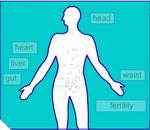
Alcohol is absorbed into your body through the stomach and small intestines. Food slows down the rate of absorption - that’s why alcohol affects you more quickly when taken on an empty stomach. An enzyme in our stomachs, known as alcohol dehydrogenase (ADH), is key in breaking down alcohol - women’s stomachs contain about 60% as much alcohol dehydrogenase as do men’s, which is one reason why women’s daily drinking guidelines are lower. Alcohol travels through the intestines to the liver and then on to the heart, brain, muscles and other tissues. This happens very quickly - within a few minutes. Usually, though not always, this has a pleasant effect.
Your body can’t store alcohol, so it breaks it down - your liver's job. The liver firstly changes alcohol into acetaldehyde (this is toxic), then into acetate (harmless), which is finally broken down into carbon dioxide and water. Find out more about how alcohol can effect you from our interactive male and female bodies.
About 90-95% of alcohol consumed is broken down by the liver, 5-10% is excreted through urine, breath and sweat.Your body’s ability to process alcohol depends on your age, weight and sex. Your body breaks down alcohol at a rate of roughly one drink (10g) per hour – this cannot be speeded up by consuming water or strong coffee.If the body can’t cope with all the alcohol in its system, the person can pass out, or in extreme cases fall into an alcoholic coma (which can be fatal). If many units have been consumed there is a risk of being over the drink drive limit the next morning.
 Drinking and all cause mortality
Light and moderate drinkers - those who drink within the weekly limits and spread their drinking over a number or days rather than binge drinking - live longer than those who abstain or drink heavily. This widely accepted relationship is known as the J-shaped curve. The relative risk of mortality is lowest among moderate consumers (at the lowest point of the J), greater among abstainers (on the left-hand side of the J), and much greater still among heavy drinkers (on the right-hand side of the J). In addition to longevity in general, the J-shaped relationship also exists for cardiovascular deaths, specifically for coronary heart disease and ischemic stroke. This 'benefit' applies to post menopausal women and men over 40, where the risk of heart attack is higher. In simple terms, alcohol ' thins your blood' and helps prevent the build up of clots and bad LDL cholesterol in your arteries. Alcohol favourably alters the balance of fats or lipids in the blood, by stimulating the liver to produce the ‘good’ high-density lipoprotein cholesterol (HDL). HDL removes the ‘bad’ low-density lipoprotein cholesterol (LDL) from arteries and veins for disposal via the bile, which is referred to as reverse cholesterol transport.
Alcohol decreases the clotting together or ‘stickiness’ of red blood cells, which if untreated could form a clot to block blood flow in an artery or vein to cause a heart attack or stroke. The message is little ( a drink a day) and often, as the blood thinning effect of alcohol lasts for approximately 24 hours and one drink confers the benefit. More alcohol does not increase protection, and regularly drinking more than the UK guidelines of 2- 3 units for women and 3-4 for men is linked to many increased health harms, such as cancers and cirrhosis of the liver, Drinking alcohol is not recommended if you have uncontrolled, high blood pressure. You should seek your doctors advice regarding alcohol consumption if you are currently on any medication, or have a history of illness, mental or physical, in the family.
Healthy lifestyle and the Mediterranean diet
Studies have shown that a healthier, ‘Mediterranean’ type diet, high in fruits, vegetables, fish, salad and olive oil and including alcohol in moderation, leads to greater longevity and a significant reduction in heart disease, late on set diabetes and stroke. Following the five heart healthy lifestyle factors of staying slim, not smoking, exercising gently daily and eating a balanced diet high in fibre, fruit and vegetables and low in saturated fats and drinking between 1/2 and two drinks a day, more than halves the risk of heart disease, type 2 diabetes and stroke.
What the experts say....
Although drinking should be for pleasure rather than for any health benefit, there is consistent medical evidence to show that light to moderate consumption of alcohol may be beneficial to health, especially for men over 40 and post-menopausal women, where the risk of heart attack is higher. Cardiovascular disease is the most common cause of death in the UK, accounting for 4 in every 10 deaths. Almost 2.6 million people are affected by heart and circulatory conditions in the UK, with someone having a heart attack every 2 seconds.
The acceptance by many that alcohol forms part of a balanced diet and lifestyle is due, in part, to the growing body of evidence from eminent researchers and physicians that drinking in moderation is not only enjoyable and sociable but may prolong life by protecting against coronary heart disease and stroke as well as late-onset diabetes, Alzheimer’s disease and in the words of Plato, the 'crabbedness of old age'!
Sir Richard Doll, Emeritus Professor of Medicine at the University of Oxford, sums up past attitudes well: "The Belief that alcohol was bad for health was so ingrained that the idea that small amounts might be good for you was hard to envisage, and it is only in the past ten years that cardiologists and specialists in preventative medicine have begun to take it seriously."
Visit www.aim-digest.com for detailed summaries on alcohol and the heart and other research.