 |
 |
 |

 |
|
|

Alcohol and the heart
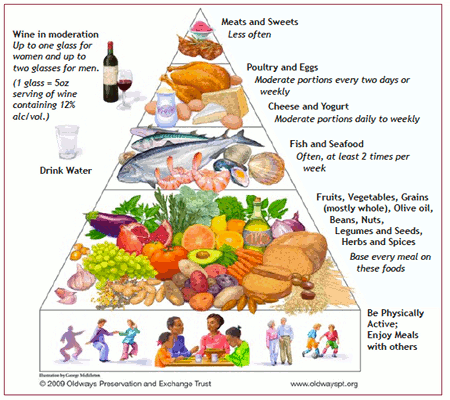 Drinking in moderation is considered to be one of the five heart healthy lifestyle components, together with not smoking, eating a diet low in saturated fats, red meats and high in vegetables grains and fruit (The Mediterranean style diet) staying slim and exercising regularly. Drinking excessively, however, increases your risk of high blood pressure, atrial fibrillation, heart disease and hemorrhagic stroke.
Despite the impressive decline in death from cardiovascular disease in the US over the last decade (a reduction of 20%), diseases of the heart and circulatory system (CVD) are still the main cause of death. Cardiovascular disease is the number one cause of death for both men and women in the United States, claiming approximately 800,000 lives annually. 51% of these are in women. Heart disease and stroke are two of the top five leading causes of death in the United States.In 2009–2010, about 47% of adults had at least one of three risk factors for cardiovascular disease—uncontrolled high blood pressure, uncontrolled high levels of low-density lipoproteins (LDL) cholesterol, or current smoking. (CDC Prevalence of Uncontrolled Risk Factors for Cardiovascular Disease: United States, 1999–2010).
Every year, more than 795,000 people in the United States have a stroke and 137,000 die from strokes (59% are female). 87% of these deaths are from ischemic stroke, caused by the interruption of blood flow to the brain due to a blood clot. The rest are haemorrhagic caused by uncontrolled bleeding in the brain.
The American Heart Association advises “If you drink alcohol, do so in moderation. This means an average of one to two drinks per day for men and one drink per day for women. (A drink is one 12 oz. beer, 4 oz. of wine, 1.5 oz. of 80-proof spirits, or 1 oz. of 100-proof spirits.) Drinking more alcohol increases such dangers as alcoholism, high blood pressure, obesity, stroke, breast cancer, suicide and accidents. Given these and other risks, the American Heart Association cautions people NOT to start drinking ... if they do not already drink alcohol”.
| Drinking more than responsibly does not increase the protective effect - and only leads to long term health harms. Drinking heavily can lead to irregular heart beat, sudden heart death and significantly increases the risk of a hemorrhagic stroke. |
How does alcohol protect my heart?
The protective effect applies to those men over 40 and post menopausal women, where the risk of heart disease is higher. It is all a matter of dose: a daily drink, in any form, favourably alters the balance of fats or lipids in the blood, by stimulating the liver to produce the 'good' high density lipoprotein cholesterol (HDL). HDL removes the 'bad' low density lipoprotein cholesterol (LDL) from arteries and veins for disposal via the bile, which is referred to as reverse cholesterol transport.
Alcohol also inhibits excessive coagulation or the clotting together of red blood cells by reducing their ‘stickiness’, and facilitates the breakdown of
blood clots. Drinking alcohol with a meal can reduce the sudden rise of a protein called fibrinogen produced by the liver. Fibrinogen increases the likelihood of harmful blood clots forming, called thrombosis.
Red wine, dark beer and traditional ciders also contain phenolic compounds or antioxidants. Phenolic compounds also inhibit excessive coagulation and enhance the relaxation of blood vessel walls, allowing better blood flow. Although the phenolic compounds are shown to be antioxidants in the test tube, it is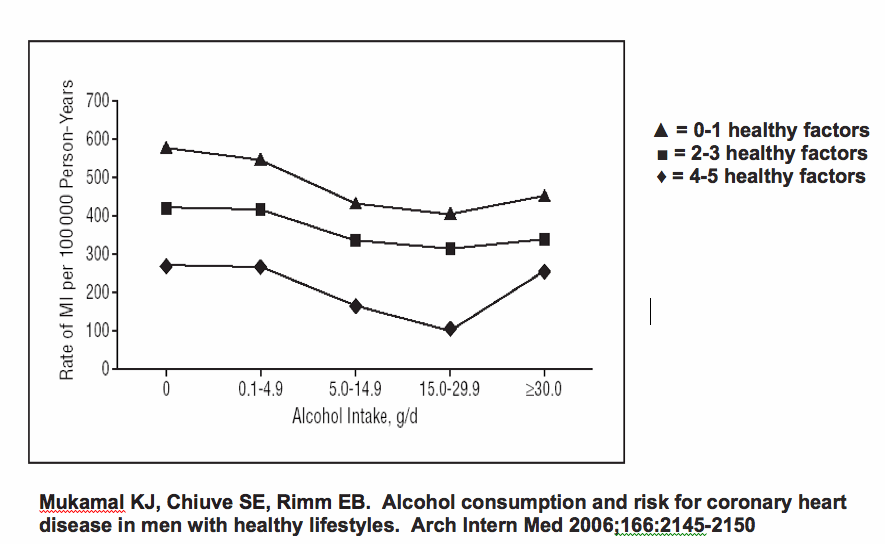 uncertain whether they inhibit the oxidation of LDL cholesterol in animals and humans, and hence prevent the build up of cholesterol in arteries, which is referred to as hardening of the arteries
Drinking more than responsibly (click here for guidelines) does not increase the protective effect - and only leads to long term health harms. Drinking heavily can lead to irregular heart beat, sudden heart death and significantly increases the risk of a hemorrhagic stroke.
The Mediterranean diet
Studies have shown that a healthier, ‘Mediterranean’ type diet, high in fruits, vegetables, fish, salad and olive oil and including alcohol in moderation, leads to greater longevity and a significant reduction in heart disease, late on set diabetes and stroke. The Lyon Heart Study found that this type of diet, combined with moderate wine consumption, might prevent a second heart attack in middle-aged men. Compared to non-drinkers, men drinking two glasses of wine a day reduced their risk of a second heart attack by 59%. Following the five heart healthy lifestyle factors of staying slim, not smoking, exercising gently daily and eating a balanced diet high in fibre, fruit and vegetables and low in saturated fats and drinking between 1/2 and two drinks a day, more than halves the risk of heart disease, type 2 diabetes and stroke.
Conversely, binge drinking, which is considered to be the consumption of more than 6 drinks per drinking session, is seen to significantly increase systolic blood pressure, which significantly increases the risk of coronary heart disease or stroke.
Drink with food
Accompanying alcohol intake with food not only decreases the effect of alcohol (lowers the higher blood alcohol level associated with drinking on an empty stomach), but helps counter damaging free radicals. Rich foods increase the state of “oxidative stress” in the body. Dietary antioxidants, including those from red wine, can help reduce the oxidation of cholesterol and lipoprotein, both implicated in cardiovascular disease. Research shows that drinking outside of meal times increases the risk of high blood pressure; and, along with abstinence, is associated with greater all cause mortality.
Stroke
Stroke is one of the leading causes of death and disability in the developed world. While heavy alcohol consumption appears to increase the risk of all types of strokes, moderate drinkers have a reduced risk of stroke compared to non-drinkers and heavy drinkers. Ischaemic strokes account for 85% of strokes. They are caused by blockage of a blood vessel by a clot, which starve the brain of blood and hence oxygen. The anti-coagulatory (clotting) effect of alcohol lasts for approximately 24 hours, and hence regular moderate alcohol consumption is necessary to maintain a reduced the risk of ischaemic stroke.
What the experts say...
The National Stroke Association Prevention Advisory Board states that “studies now show that drinking up to two drinks per day can reduce your risk for stroke by about half. More alcohol than this can increase your risk for stroke by as much as three times.”
Please note, however, that drinking heavily significantly increases the risk of a hemorrhagic stroke.
Alcohol and the heart - further information (Click for more information)
Other sources of more information:
 |
 |
American Heart Association www.heart.org
American Stroke Association www.strokeassociation.org/